


Sapphire Reserve Dining: Major Changes, 32 New (Oct 2026)
NCnextcard team
Advertiser Disclosure: nextcard may receive compensation from card issuers. Opinions expressed here are the author's alone, not those of any bank, credit card issuer, airlines or hotel chain. For the most up-to-date terms & conditions, refer to the official credit card application on the issuer's website.
Finding Chase Sapphire Reserve® Exclusive Tables restaurants through OpenTable works fine if you're only checking one city, but comparing options across regions or seeing pricing upfront isn't possible without clicking into every restaurant or OpenTable page. That makes it tough to plan how to use your credit and how much of your $150 semiannual credit you'll actually use before booking.
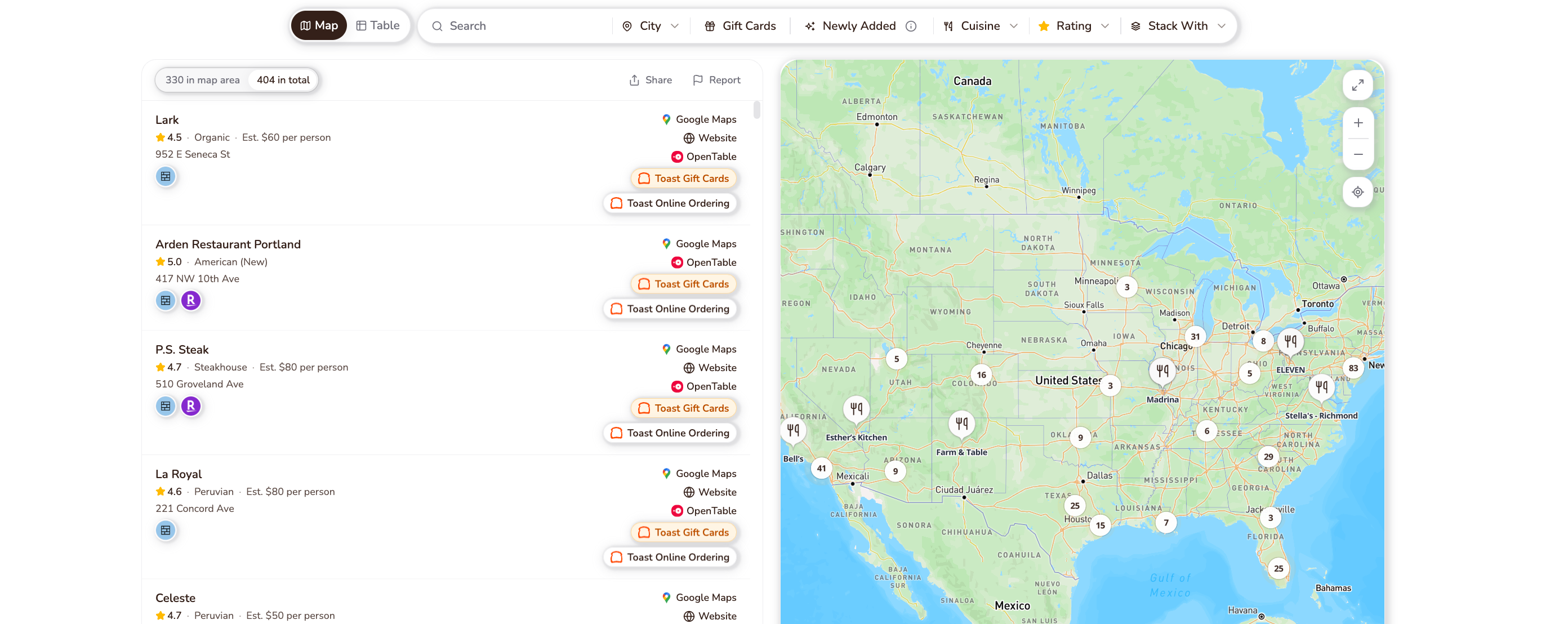
We built the CSR Dining Credit Map, a focused tool for Sapphire Reserve Exclusive Tables. It maps (tables) every current restaurant, shows all additions and removals from the latest update, and includes average per-person costs so you can filter by destination and price range before booking.
This guide is fully updated as of September 2026.
TL;DR
The $300 annual dining credit is split into two separate $150 semiannual credits (H1: January through June, H2: July through December)
Exclusive Tables gives you access to special seating at eligible restaurants through OpenTable, but is not required to use the dining credit
Exclusive Tables now covers 50+ US cities, including major metros like NYC, SF, LA, and Chicago.
The CSR Dining Credit Map puts every Exclusive Tables restaurant in one searchable view, with pricing, cuisine filters, and the complete list of restaurants added or removed in the latest update.
The $300 annual dining credit is structured as two separate $150 semiannual credits: up to $150 from January through June (H1), and up to $150 from July through December (H2). When you dine at an eligible restaurant and pay with your Reserve, the statement credit should post to your account within 3 business days, though it may take up to 4 weeks in some cases.
If you don't use the full $150 in a semiannual period, it doesn't roll over. H1 credits expire on June 30 and H2 credits expire on December 31. Check your app and think about which reservations you want to make before the credit expires.
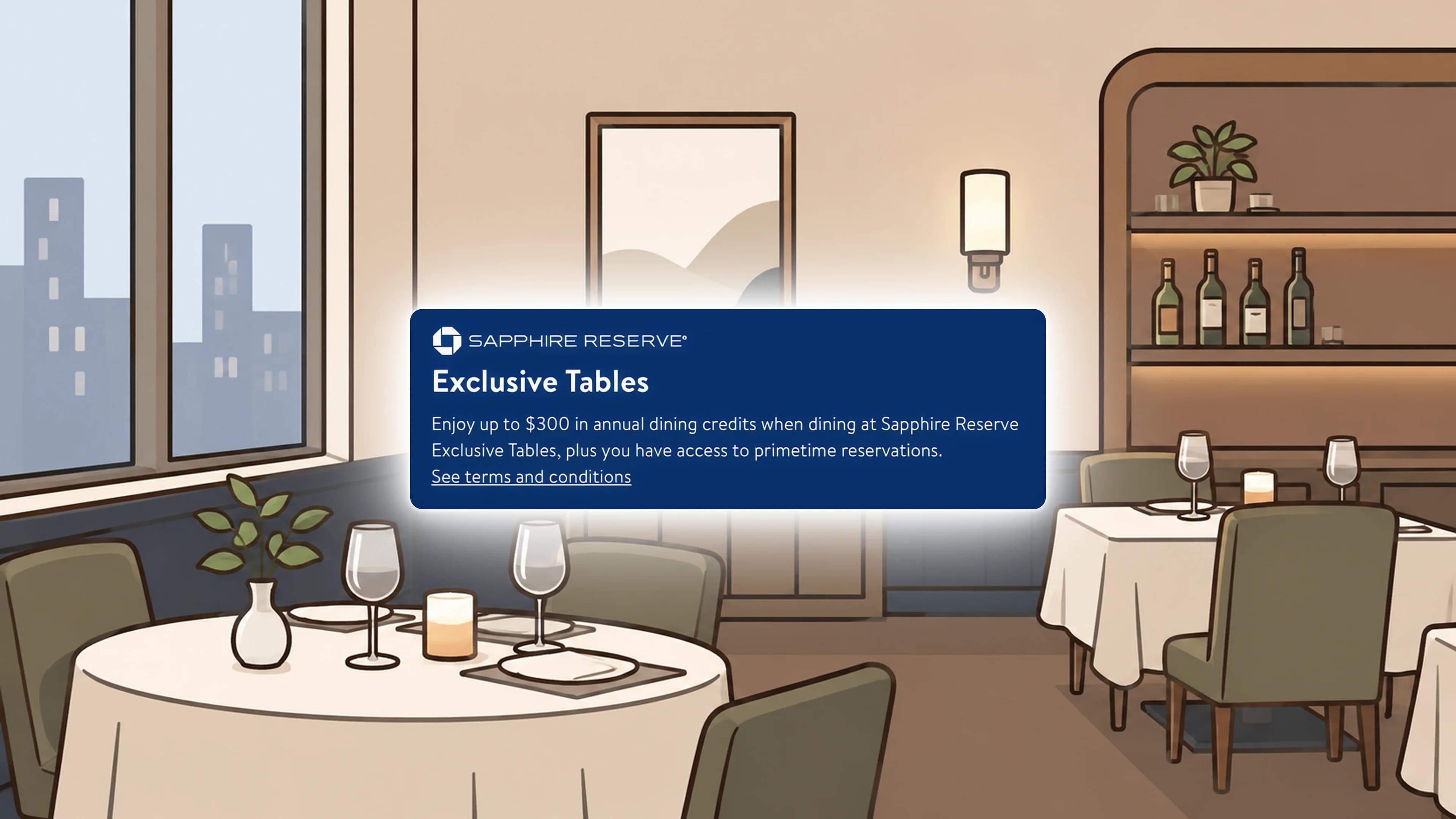
The Reserve includes access to Exclusive Tables, a benefit offering reserved seating at sold-out restaurants during peak hours. Through Chase's partnership with OpenTable, cardholders access reservation times unavailable to the public. You'll book through OpenTable and pay standard menu prices, but you're securing reservations others can't get.
Technically speaking, Exclusive Tables is a separate benefit from the $300 annual dining credit. All Exclusive Tables restaurants are eligible for the dining credit (as far as we know).
You do not have to book an Exclusive Tables/Sapphire reservation to use the $300 dining credit. To use the dining credit, you literally just need to pay the bill with your qualifying Chase Sapphire Reserve card. No fancy reservation or anything required.
One way to find qualifying restaurants is by going to OpenTable's site and scrolling through each of the restaurants available in each city. Upon loading the page, you can start your search by navigating to your city.
If you're getting frustrated having to click into each city individually and then scrolling around to see where they all are, just use the nextcard Sapphire Reserve $300 Dining Credit Map. It maps all the restaurants where you can use the credit, layers in other dining rewards programs so you can spot stacking opportunities, and covers every city at once (no city-by-city searching required).

Restaurant participation changes over time, so check OpenTable's list as final validation near the day of your visit. The map and the update lists below reflect the recent August 28, 2026 restaurant changes.
New York City remains the largest Exclusive Tables market. The recent August update added bōm, Calabash, Mike's Bistro - UES, and Phoenix Palace, while removing Demo, Parcelle Greenwich Village, SAPPEISAN, and Scarr's Pizza. The current New York City area list has 44 restaurants:
Altro Paradiso
ASKA (Brooklyn)
Bar Kabawa
Bar Miller
Blu on the Hudson
bōm
Calabash
Casa Mono
Ci Siamo
Don Angie
Drift Restaurant & Bar
Estela
Fairfax
Felina Steak- Jersey City (Jersey City)
Gramercy Tavern
Hawksmoor NYC
Jeffrey's Grocery
Joseph Leonard
Kabawa
l'abeille
Le B.
Maddy Rose at Liberty House (Jersey City)
Manhatta
Mike's Bistro - UES
Mitsuru
Momofuku Noodle Bar - East Village
Momofuku Noodle Bar - Uptown
Muku
Musaafer - New York
Parcelle Chinatown
Phoenix Palace
Potluck Club
Razza - Jersey City (Jersey City)
Red Hook Tavern (Brooklyn)
Sailor (Brooklyn)
San Sabino
Sunn's
Tavern Next Door (Brooklyn)
The Bar Room at The Modern
The Dining Room at Gramercy Tavern
The Modern
Tolo
Una Pizza Napoletana
Union Square Cafe
The program includes fine dining destinations and casual spots, with prices ranging from $30 per person to tasting menus over $200.
San Francisco and the broader Bay Area maintain strong representation in the Exclusive Tables program.

The current Bay Area list has 29 restaurants:
Angler San Francisco
Aziza
Bodega
Burdell (Oakland)
Californios
Chez Noir (Carmel-by-the-Sea)
Commis (Oakland)
Dalida
Ernest
Frances
Gary Danko
Hilda and Jesse
House of Prime Rib
Maria Isabel
Niku Steakhouse
Nisei
O' by Claude Le Tohic
Omakase
Popoca (Oakland)
PRESS Restaurant (St. Helena)
Rich Table
Saison
Saison Cellar & Wine Bar - San Francisco
Selby's (Redwood City)
SingleThread Restaurant & Inn (Healdsburg)
State Bird Provisions
The Anchovy Bar
The Happy Crane
The Progress
You'll find everything from Italian bistros to Californian cuisine. Per-person averages typically fall between $40 (e.g. Bodega) and $150 (eg Saison Wine Cellar), though some high-end options like Californios exceed that range.
Outside the Bay Area list above, four additional northern California restaurants remain eligible: Allora (Sacramento), Camden Spit and Larder (Sacramento), Canon (Sacramento), and Ella Dining Room and Bar (Sacramento).
Los Angeles proper has 22 eligible restaurants as of September 2026. The current mix includes New American, Asian, Mexican, Italian, and seafood concepts across several city neighborhoods; use the CSR Dining Credit Map for the complete current list and pricing.
View all the eligible spots on the CSR Dining Credit Map!
Chicago's Exclusive Tables restaurants span neighborhoods like River North, West Loop, Lincoln Park, and Wicker Park. Participating locations include steakhouses, Italian restaurants, and contemporary American dining, with per-person costs typically ranging from $35 to $400 (Ever, 2 Michelin Star).
avec Restaurant
Boka
Chicago Cut Steakhouse
Fioretta
Momotaro
Alla Vita
avec River North
PERILLA korean steakhouse
Obelix
Kasama
Daisies Chicago
Mott Street
Mirra
Lula Cafe
PIZZ'AMICI
Brasero
Ever
Sepia
Hawksmoor Chicago
Anelya
After
Mariscos San Pedro
Elske
Prime & Provisions Steakhouse
Gingie
Cariño
NORIKO
The program features downtown spots near the Loop and neighborhood favorites in areas like Fulton Market. Because restaurant participation changes, use OpenTable's Exclusive Tables filter when searching to confirm which Chicago locations currently accept the dining credit.
Las Vegas improved in the August 28 update. The current list has three Chase Sapphire Reserve Exclusive Tables restaurants:
Ada’s
Al Solito Posto
Esther’s Kitchen
Other former participants, including Nobu, Hell's Kitchen, Top of the World, Harlo, and Vanderpump, remain off the current list (not eligible).
The dining credit only works for purchases made directly at qualifying restaurants using your Sapphire Reserve. To be clear, no reservation is required; you just need to make the payment using your Sapphire Reserve.
If you order takeout directly at the restaurant, there are reports that the credit will work.
Also, splitting the bill between multiple cards works totally fine, as long as the transaction is charged directly from the restaurant. For example, I had a $300 bill at Angler in SF that I used two separate Reserves for (we got all the credits).
But, ordering through a third party food app like DoorDash or UberEats will not trigger the credit!
OpenTable's Exclusive Tables filter shows participating restaurants when you're logged in and searching for reservations. The filter appears in the main search interface after you've linked your card to your account. It works well for searching one city at a time or confirming a specific restaurant, but it doesn't give you a cross-city view or price comparisons across regions.
You can use the nextcard Sapphire Reserve dining credit map to see all 406 restaurants tracked as eligible after the August 28, 2026 update. It shows:
Cuisine, ratings, and estimated pricing
Other dining rewards programs that may stack
Newly added/removed restaurants
Gift card eligibility with community datapoints
Finding restaurants that accept the Chase Sapphire Reserve dining credit should not require checking OpenTable city by city. The CSR Dining Credit Map tracks 406 eligible restaurants as of September 2026, with filters for city, cuisine, price range, and other dining programs. Confirm eligibility close to the day you dine and use each $150 semiannual credit before it expires.
No. You just need to pay with your Sapphire Reserve at a qualifying restaurant. No reservation required.
No, the credit doesn't roll over. You get up to $150 from January 1st through June 30th and another $150 from July 1st through December 31st.
You might be able to, as long as the payment is made directly with the qualifying restaurant. If you make the payment through UberEats or a third-party vendor, it will not properly track.
Chase offers up to $300 annually in two $150 periods at 406 curated restaurants through OpenTable, while Amex Platinum offers up to $400 annually through Resy's broader network of 10k+ restaurants, subject to enrollment.
nextcard's Chase Sapphire Reserve Dining Credit Map shows every eligible restaurant across the United States, searchable by city with filters for cuisine and price range, including average cost per person to help you plan your credit usage.
This update removed 64 restaurants from the Chase Sapphire Reserve dining credit list.
This additional update removed 35 restaurants, but added 36 new restaurants. You can view the full list of newly added and removed restaurants on the CSR Dining Credit Map.
Advertiser Disclosure: nextcard may receive compensation from card issuers. Opinions expressed here are the author's alone, not those of any bank, credit card issuer, airlines or hotel chain. For the most up-to-date terms & conditions, refer to the official credit card application on the issuer's website.
Finding Chase Sapphire Reserve® Exclusive Tables restaurants through OpenTable works fine if you're only checking one city, but comparing options across regions or seeing pricing upfront isn't possible without clicking into every restaurant or OpenTable page. That makes it tough to plan how to use your credit and how much of your $150 semiannual credit you'll actually use before booking.
We built the CSR Dining Credit Map, a focused tool for Sapphire Reserve Exclusive Tables. It maps (tables) every current restaurant, shows all additions and removals from the latest update, and includes average per-person costs so you can filter by destination and price range before booking.
This guide is fully updated as of September 2026.
TL;DR
The $300 annual dining credit is split into two separate $150 semiannual credits (H1: January through June, H2: July through December)
Exclusive Tables gives you access to special seating at eligible restaurants through OpenTable, but is not required to use the dining credit
Exclusive Tables now covers 50+ US cities, including major metros like NYC, SF, LA, and Chicago.
The CSR Dining Credit Map puts every Exclusive Tables restaurant in one searchable view, with pricing, cuisine filters, and the complete list of restaurants added or removed in the latest update.
The $300 annual dining credit is structured as two separate $150 semiannual credits: up to $150 from January through June (H1), and up to $150 from July through December (H2). When you dine at an eligible restaurant and pay with your Reserve, the statement credit should post to your account within 3 business days, though it may take up to 4 weeks in some cases.
If you don't use the full $150 in a semiannual period, it doesn't roll over. H1 credits expire on June 30 and H2 credits expire on December 31. Check your app and think about which reservations you want to make before the credit expires.
The Reserve includes access to Exclusive Tables, a benefit offering reserved seating at sold-out restaurants during peak hours. Through Chase's partnership with OpenTable, cardholders access reservation times unavailable to the public. You'll book through OpenTable and pay standard menu prices, but you're securing reservations others can't get.
Technically speaking, Exclusive Tables is a separate benefit from the $300 annual dining credit. All Exclusive Tables restaurants are eligible for the dining credit (as far as we know).
You do not have to book an Exclusive Tables/Sapphire reservation to use the $300 dining credit. To use the dining credit, you literally just need to pay the bill with your qualifying Chase Sapphire Reserve card. No fancy reservation or anything required.
One way to find qualifying restaurants is by going to OpenTable's site and scrolling through each of the restaurants available in each city. Upon loading the page, you can start your search by navigating to your city.
If you're getting frustrated having to click into each city individually and then scrolling around to see where they all are, just use the nextcard Sapphire Reserve $300 Dining Credit Map. It maps all the restaurants where you can use the credit, layers in other dining rewards programs so you can spot stacking opportunities, and covers every city at once (no city-by-city searching required).
Restaurant participation changes over time, so check OpenTable's list as final validation near the day of your visit. The map and the update lists below reflect the recent August 28, 2026 restaurant changes.
New York City remains the largest Exclusive Tables market. The recent August update added bōm, Calabash, Mike's Bistro - UES, and Phoenix Palace, while removing Demo, Parcelle Greenwich Village, SAPPEISAN, and Scarr's Pizza. The current New York City area list has 44 restaurants:
Altro Paradiso
ASKA (Brooklyn)
Bar Kabawa
Bar Miller
Blu on the Hudson
bōm
Calabash
Casa Mono
Ci Siamo
Don Angie
Drift Restaurant & Bar
Estela
Fairfax
Felina Steak- Jersey City (Jersey City)
Gramercy Tavern
Hawksmoor NYC
Jeffrey's Grocery
Joseph Leonard
Kabawa
l'abeille
Le B.
Maddy Rose at Liberty House (Jersey City)
Manhatta
Mike's Bistro - UES
Mitsuru
Momofuku Noodle Bar - East Village
Momofuku Noodle Bar - Uptown
Muku
Musaafer - New York
Parcelle Chinatown
Phoenix Palace
Potluck Club
Razza - Jersey City (Jersey City)
Red Hook Tavern (Brooklyn)
Sailor (Brooklyn)
San Sabino
Sunn's
Tavern Next Door (Brooklyn)
The Bar Room at The Modern
The Dining Room at Gramercy Tavern
The Modern
Tolo
Una Pizza Napoletana
Union Square Cafe
The program includes fine dining destinations and casual spots, with prices ranging from $30 per person to tasting menus over $200.
San Francisco and the broader Bay Area maintain strong representation in the Exclusive Tables program.
The current Bay Area list has 29 restaurants:
Angler San Francisco
Aziza
Bodega
Burdell (Oakland)
Californios
Chez Noir (Carmel-by-the-Sea)
Commis (Oakland)
Dalida
Ernest
Frances
Gary Danko
Hilda and Jesse
House of Prime Rib
Maria Isabel
Niku Steakhouse
Nisei
O' by Claude Le Tohic
Omakase
Popoca (Oakland)
PRESS Restaurant (St. Helena)
Rich Table
Saison
Saison Cellar & Wine Bar - San Francisco
Selby's (Redwood City)
SingleThread Restaurant & Inn (Healdsburg)
State Bird Provisions
The Anchovy Bar
The Happy Crane
The Progress
You'll find everything from Italian bistros to Californian cuisine. Per-person averages typically fall between $40 (e.g. Bodega) and $150 (eg Saison Wine Cellar), though some high-end options like Californios exceed that range.
Outside the Bay Area list above, four additional northern California restaurants remain eligible: Allora (Sacramento), Camden Spit and Larder (Sacramento), Canon (Sacramento), and Ella Dining Room and Bar (Sacramento).
Los Angeles proper has 22 eligible restaurants as of September 2026. The current mix includes New American, Asian, Mexican, Italian, and seafood concepts across several city neighborhoods; use the CSR Dining Credit Map for the complete current list and pricing.
View all the eligible spots on the CSR Dining Credit Map!
Chicago's Exclusive Tables restaurants span neighborhoods like River North, West Loop, Lincoln Park, and Wicker Park. Participating locations include steakhouses, Italian restaurants, and contemporary American dining, with per-person costs typically ranging from $35 to $400 (Ever, 2 Michelin Star).
avec Restaurant
Boka
Chicago Cut Steakhouse
Fioretta
Momotaro
Alla Vita
avec River North
PERILLA korean steakhouse
Obelix
Kasama
Daisies Chicago
Mott Street
Mirra
Lula Cafe
PIZZ'AMICI
Brasero
Ever
Sepia
Hawksmoor Chicago
Anelya
After
Mariscos San Pedro
Elske
Prime & Provisions Steakhouse
Gingie
Cariño
NORIKO
The program features downtown spots near the Loop and neighborhood favorites in areas like Fulton Market. Because restaurant participation changes, use OpenTable's Exclusive Tables filter when searching to confirm which Chicago locations currently accept the dining credit.
Las Vegas improved in the August 28 update. The current list has three Chase Sapphire Reserve Exclusive Tables restaurants:
Ada’s
Al Solito Posto
Esther’s Kitchen
Other former participants, including Nobu, Hell's Kitchen, Top of the World, Harlo, and Vanderpump, remain off the current list (not eligible).
The dining credit only works for purchases made directly at qualifying restaurants using your Sapphire Reserve. To be clear, no reservation is required; you just need to make the payment using your Sapphire Reserve.
If you order takeout directly at the restaurant, there are reports that the credit will work.
Also, splitting the bill between multiple cards works totally fine, as long as the transaction is charged directly from the restaurant. For example, I had a $300 bill at Angler in SF that I used two separate Reserves for (we got all the credits).
But, ordering through a third party food app like DoorDash or UberEats will not trigger the credit!
OpenTable's Exclusive Tables filter shows participating restaurants when you're logged in and searching for reservations. The filter appears in the main search interface after you've linked your card to your account. It works well for searching one city at a time or confirming a specific restaurant, but it doesn't give you a cross-city view or price comparisons across regions.
You can use the nextcard Sapphire Reserve dining credit map to see all 406 restaurants tracked as eligible after the August 28, 2026 update. It shows:
Cuisine, ratings, and estimated pricing
Other dining rewards programs that may stack
Newly added/removed restaurants
Gift card eligibility with community datapoints
Finding restaurants that accept the Chase Sapphire Reserve dining credit should not require checking OpenTable city by city. The CSR Dining Credit Map tracks 406 eligible restaurants as of September 2026, with filters for city, cuisine, price range, and other dining programs. Confirm eligibility close to the day you dine and use each $150 semiannual credit before it expires.
No. You just need to pay with your Sapphire Reserve at a qualifying restaurant. No reservation required.
No, the credit doesn't roll over. You get up to $150 from January 1st through June 30th and another $150 from July 1st through December 31st.
You might be able to, as long as the payment is made directly with the qualifying restaurant. If you make the payment through UberEats or a third-party vendor, it will not properly track.
Chase offers up to $300 annually in two $150 periods at 406 curated restaurants through OpenTable, while Amex Platinum offers up to $400 annually through Resy's broader network of 10k+ restaurants, subject to enrollment.
nextcard's Chase Sapphire Reserve Dining Credit Map shows every eligible restaurant across the United States, searchable by city with filters for cuisine and price range, including average cost per person to help you plan your credit usage.
This update removed 64 restaurants from the Chase Sapphire Reserve dining credit list.
This additional update removed 35 restaurants, but added 36 new restaurants. You can view the full list of newly added and removed restaurants on the CSR Dining Credit Map.
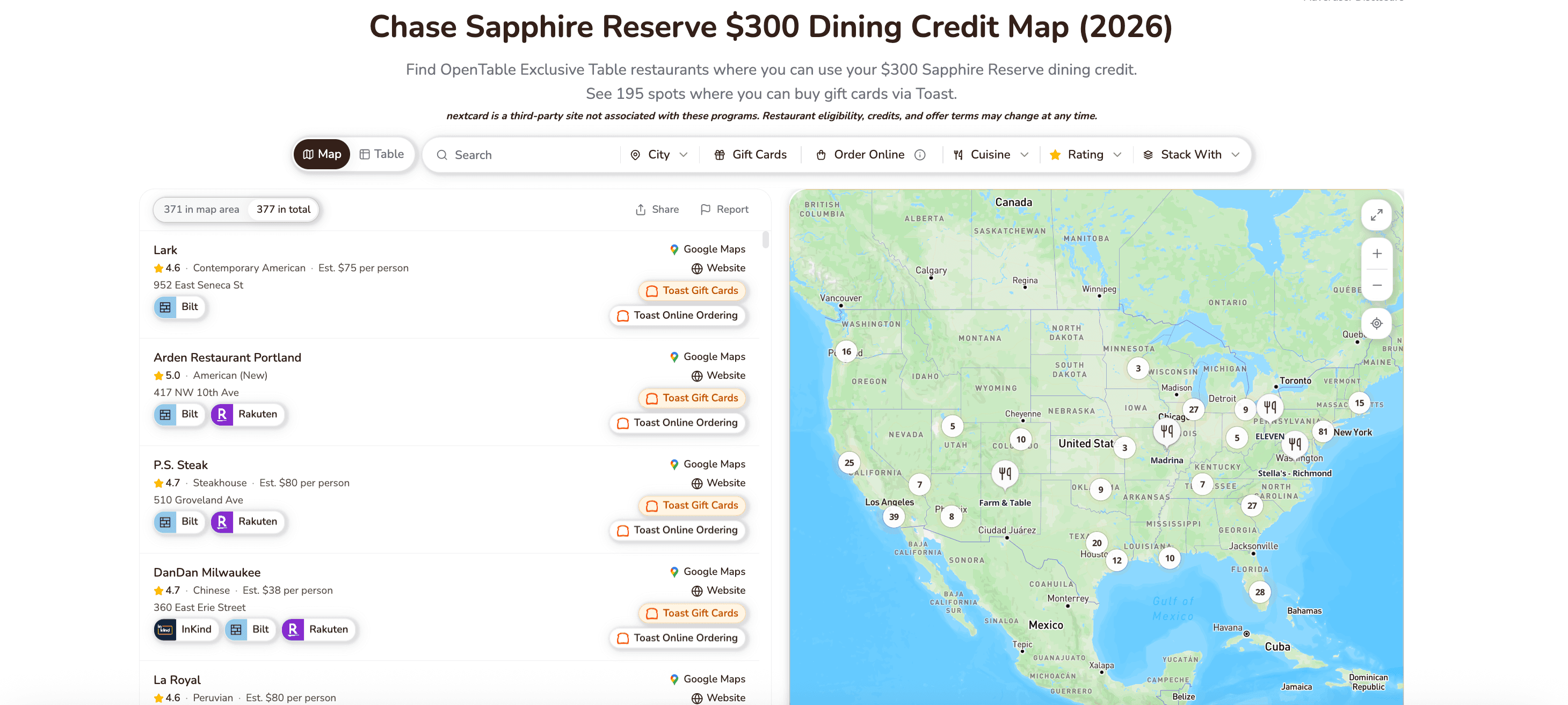
Find OpenTable Exclusive Table restaurants where you can use your $300 Sapphire Reserve dining credit. See 150+ spots where you can buy gift cards via Toast.
Interactive tool
Open tool