


Best Way to Use Bilt Cash: Complete Guide for February 2026
NCnextcard team

Bilt Obsidian vs Chase Sapphire Preferred (75k bonus) breakdown & calculator for June 2026. Compare rent rewards, travel earn rates, and transfer partners.
Advertiser Disclosure: nextcard may receive compensation from card issuers. Opinions expressed here are the author's alone, not those of any bank, credit card issuer, airlines or hotel chain. For the most up-to-date terms & conditions, refer to the official credit card application on the issuer's website.
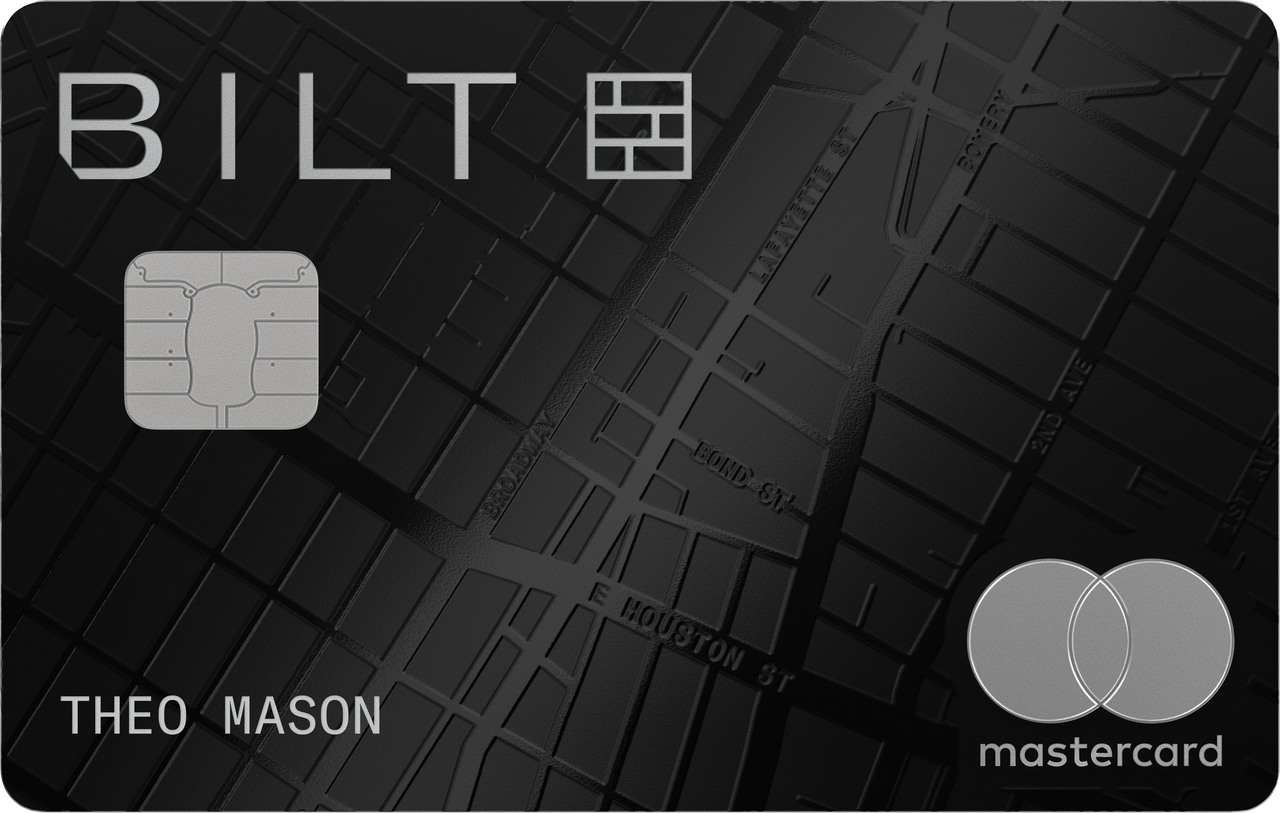
The Bilt Obsidian Card is one of the newest entrants to the "low annual fee transferable points" space and is rightfully compared against the likes of the Chase Sapphire Preferred® Card.
This debate hinges on whether or not you have monthly housing payments or if you are willing to juggle Bilt Cash. When you elect to earn Flexible Bilt Cash, Bilt can earn up to 1X on rent, which for someone paying $2,000 rent per month, can mean an additional 24,000 points per year that the Sapphire Preferred simply can't match.
Despite the fact that both cards have similar transfer partners, Chase fights back with a much larger 75,000-point welcome bonus and a sturdier/more reliable banking infrastructure.
The Obsidian is built for people who want to put housing payments, usually their biggest monthly expense, to work.
Unlock point earnings on rent and mortgage payments with no transaction fee, up to 1X (when choosing to earn 4% back in Bilt Cash on everyday spend)
3X points on your choice of grocery (up to $25K/year) or dining
Earn 2X on travel, and 1X on all other payments
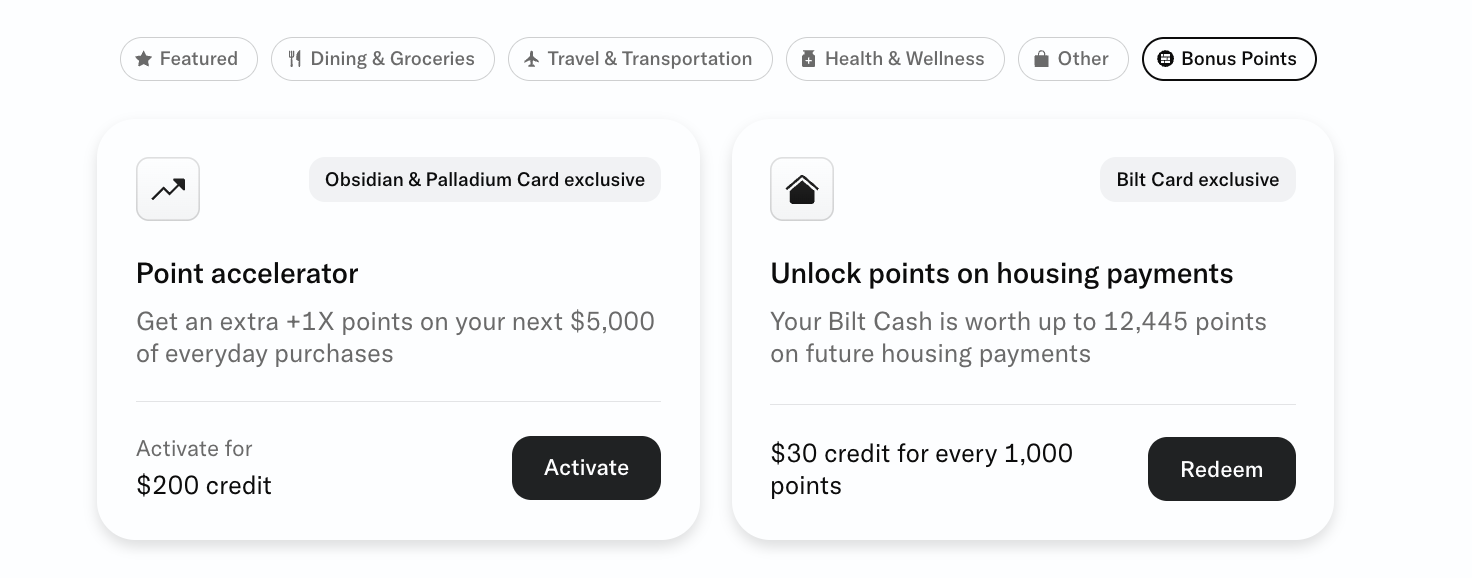
By redeeming Bilt Cash against your rent, you can essentially get an additional 1.33 points for every $1 spent on your card (limits apply). For instance, let's say you spend $500/mo on your card and your rent is $1,000.
You'll earn $20 Bilt Cash, which you can turn into Bilt Points at a rate of $0.03 Bilt Cash = 1 Bilt Point
This means, $20 Bilt Cash = 666 Bilt Points
So, you earn 500 Bilt Points (from 1x spend $500/mo) + 666 Bilt Points = 1,166 Bilt Points for $500 spend (2.33x)
The Sapphire Preferred is the stronger pick for frequent travelers who don't want to deal with Bilt Cash, especially those who already regularly use the Chase Travel portal.
Earn 75,000 bonus points after you spend $5,000 on purchases in the first 3 months from account opening (much larger than the Obsidian’s)
With the refresh starting June 15, 2026, the card will earn 5x points on Chase Travel, 3x points on dining, select streaming services, online groceries, gas, EV charging, and vacation homes from top brands like Airbnb and Vrbo.
It also earns 2x points on other travel purchases
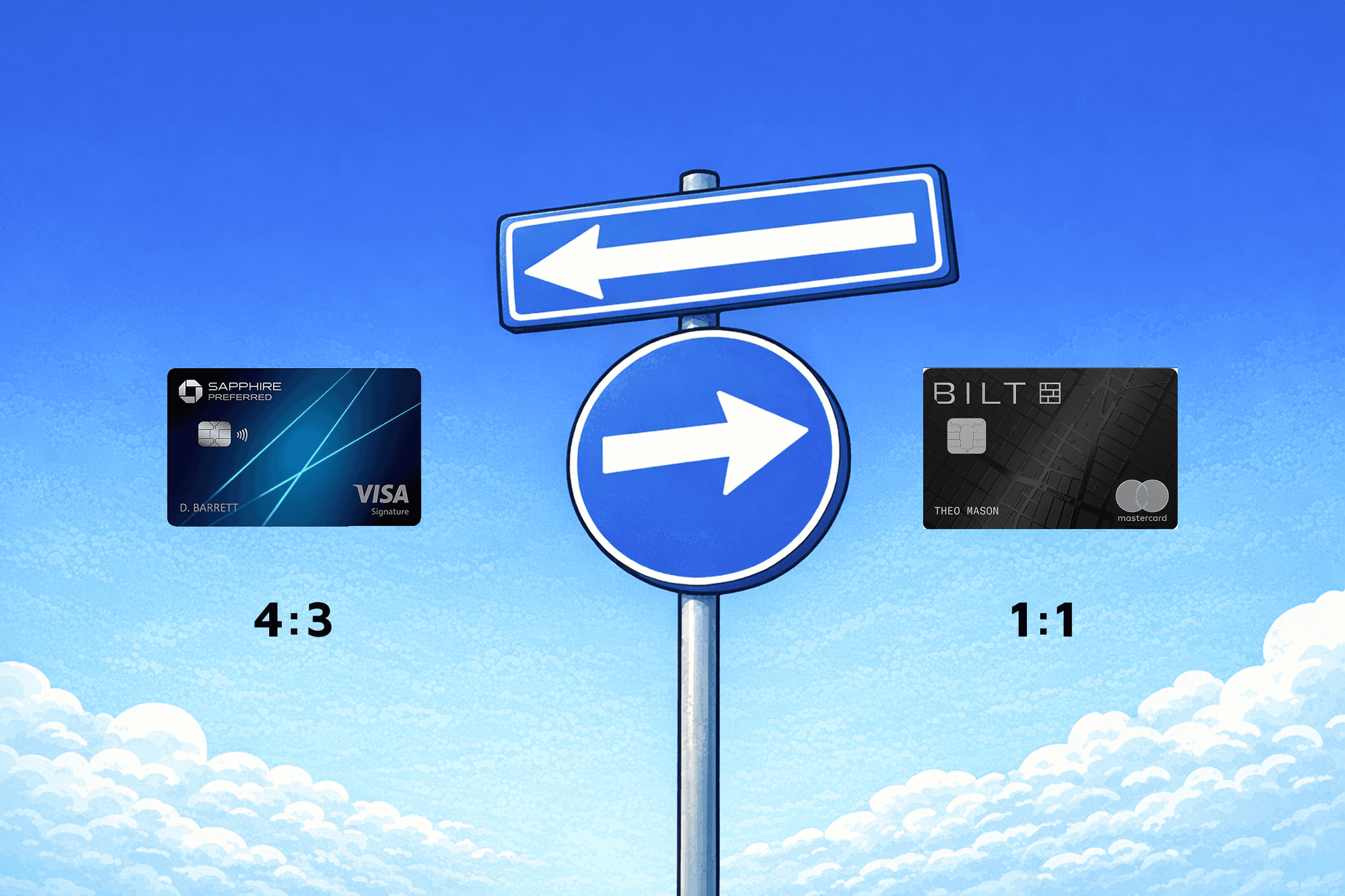
While you can access many transfer partners at a 1:1 value, Hyatt will soon be nerfed to a 4:3 ratio, which is unfortunate if you plan on using your points this way
It also now carries $600+ in potential credits, which is crazy for a $95 annual fee card.
We think these cards shouldn't really be thought of as head to head competitors; rather, they do very well when combined together, especially if you have monthly housing payments.
You can track both in one place via nextcard wallet and see which one pulls ahead based on your actual spending patterns.
Both programs hold up well here. Chase Ultimate Rewards has strong transfer partners, including United, Air France/KLM, and World of Hyatt. However, Sapphire Preferred transfers to World of Hyatt are moving to a 4:3 ratio, which weakens one of Chase's biggest historical advantages. Bilt Rewards overlaps with several major Chase partners and adds unique partners of its own, including Atmos and Japan Airlines. Neither program is obviously superior for every traveler, but Bilt has the slight edge if you care mainly about partner breadth and Hyatt-style transfer value.
Yes, and for renters or homeowners, the Bilt Obsidian Card and Chase Sapphire Preferred® Card can be a compelling combination.
Since Obsidian lets you choose 3x on either grocery, up to $25,000 per year, or dining, it pairs well as a high-earning grocery card alongside the Sapphire Preferred, which earns 3x on dining.
The Preferred also has stronger travel protections and better travel booking earn rates through Chase Travel. One thing to keep in mind: Chase’s 5/24 rule means application order matters. If you plan to hold both cards, getting the Chase Sapphire Preferred® Card first is generally the safer move before adding other cards, especially since it usually has the larger new cardmember bonus.
Bilt Obsidian vs Chase Sapphire Preferred (75k bonus) breakdown & calculator for June 2026. Compare rent rewards, travel earn rates, and transfer partners.
Advertiser Disclosure: nextcard may receive compensation from card issuers. Opinions expressed here are the author's alone, not those of any bank, credit card issuer, airlines or hotel chain. For the most up-to-date terms & conditions, refer to the official credit card application on the issuer's website.
The Bilt Obsidian Card is one of the newest entrants to the "low annual fee transferable points" space and is rightfully compared against the likes of the Chase Sapphire Preferred® Card.
This debate hinges on whether or not you have monthly housing payments or if you are willing to juggle Bilt Cash. When you elect to earn Flexible Bilt Cash, Bilt can earn up to 1X on rent, which for someone paying $2,000 rent per month, can mean an additional 24,000 points per year that the Sapphire Preferred simply can't match.
Despite the fact that both cards have similar transfer partners, Chase fights back with a much larger 75,000-point welcome bonus and a sturdier/more reliable banking infrastructure.
The Obsidian is built for people who want to put housing payments, usually their biggest monthly expense, to work.
Unlock point earnings on rent and mortgage payments with no transaction fee, up to 1X (when choosing to earn 4% back in Bilt Cash on everyday spend)
3X points on your choice of grocery (up to $25K/year) or dining
Earn 2X on travel, and 1X on all other payments
By redeeming Bilt Cash against your rent, you can essentially get an additional 1.33 points for every $1 spent on your card (limits apply). For instance, let's say you spend $500/mo on your card and your rent is $1,000.
You'll earn $20 Bilt Cash, which you can turn into Bilt Points at a rate of $0.03 Bilt Cash = 1 Bilt Point
This means, $20 Bilt Cash = 666 Bilt Points
So, you earn 500 Bilt Points (from 1x spend $500/mo) + 666 Bilt Points = 1,166 Bilt Points for $500 spend (2.33x)
The Sapphire Preferred is the stronger pick for frequent travelers who don't want to deal with Bilt Cash, especially those who already regularly use the Chase Travel portal.
Earn 75,000 bonus points after you spend $5,000 on purchases in the first 3 months from account opening (much larger than the Obsidian’s)
With the refresh starting June 15, 2026, the card will earn 5x points on Chase Travel, 3x points on dining, select streaming services, online groceries, gas, EV charging, and vacation homes from top brands like Airbnb and Vrbo.
It also earns 2x points on other travel purchases
While you can access many transfer partners at a 1:1 value, Hyatt will soon be nerfed to a 4:3 ratio, which is unfortunate if you plan on using your points this way
It also now carries $600+ in potential credits, which is crazy for a $95 annual fee card.
We think these cards shouldn't really be thought of as head to head competitors; rather, they do very well when combined together, especially if you have monthly housing payments.
You can track both in one place via nextcard wallet and see which one pulls ahead based on your actual spending patterns.
Both programs hold up well here. Chase Ultimate Rewards has strong transfer partners, including United, Air France/KLM, and World of Hyatt. However, Sapphire Preferred transfers to World of Hyatt are moving to a 4:3 ratio, which weakens one of Chase's biggest historical advantages. Bilt Rewards overlaps with several major Chase partners and adds unique partners of its own, including Atmos and Japan Airlines. Neither program is obviously superior for every traveler, but Bilt has the slight edge if you care mainly about partner breadth and Hyatt-style transfer value.
Yes, and for renters or homeowners, the Bilt Obsidian Card and Chase Sapphire Preferred® Card can be a compelling combination.
Since Obsidian lets you choose 3x on either grocery, up to $25,000 per year, or dining, it pairs well as a high-earning grocery card alongside the Sapphire Preferred, which earns 3x on dining.
The Preferred also has stronger travel protections and better travel booking earn rates through Chase Travel. One thing to keep in mind: Chase’s 5/24 rule means application order matters. If you plan to hold both cards, getting the Chase Sapphire Preferred® Card first is generally the safer move before adding other cards, especially since it usually has the larger new cardmember bonus.
Bilt Obsidian vs Chase Sapphire Preferred (75k bonus) breakdown & calculator for June 2026. Compare rent rewards, travel earn rates, and transfer partners.
Bilt Obsidian vs Chase Sapphire Preferred (75k bonus) breakdown & calculator for June 2026. Compare rent rewards, travel earn rates, and transfer partners.
The Obsidian is built for people who want to put housing payments, usually their biggest monthly expense, to work.
Unlock point earnings on rent and mortgage payments with no transaction fee, up to 1X (when choosing to earn 4% back in Bilt Cash on everyday spend)
3X points on your choice of grocery (up to $25K/year) or dining
Earn 2X on travel, and 1X on all other payments
By redeeming Bilt Cash against your rent, you can essentially get an additional 1.33 points for every $1 spent on your card (limits apply). For instance, let's say you spend $500/mo on your card and your rent is $1,000.
You'll earn $20 Bilt Cash, which you can turn into Bilt Points at a rate of $0.03 Bilt Cash = 1 Bilt Point
This means, $20 Bilt Cash = 666 Bilt Points
So, you earn 500 Bilt Points (from 1x spend $500/mo) + 666 Bilt Points = 1,166 Bilt Points for $500 spend (2.33x)
The Sapphire Preferred is the stronger pick for frequent travelers who don't want to deal with Bilt Cash, especially those who already regularly use the Chase Travel portal.
Earn 75,000 bonus points after you spend $5,000 on purchases in the first 3 months from account opening (much larger than the Obsidian’s)
With the refresh starting June 15, 2026, the card will earn 5x points on Chase Travel, 3x points on dining, select streaming services, online groceries, gas, EV charging, and vacation homes from top brands like Airbnb and Vrbo.
It also earns 2x points on other travel purchases
While you can access many transfer partners at a 1:1 value, Hyatt will soon be nerfed to a 4:3 ratio, which is unfortunate if you plan on using your points this way
It also now carries $600+ in potential credits, which is crazy for a $95 annual fee card.
We think these cards shouldn't really be thought of as head to head competitors; rather, they do very well when combined together, especially if you have monthly housing payments.
You can track both in one place via nextcard wallet and see which one pulls ahead based on your actual spending patterns.
Both programs hold up well here. Chase Ultimate Rewards has strong transfer partners, including United, Air France/KLM, and World of Hyatt. However, Sapphire Preferred transfers to World of Hyatt are moving to a 4:3 ratio, which weakens one of Chase's biggest historical advantages. Bilt Rewards overlaps with several major Chase partners and adds unique partners of its own, including Atmos and Japan Airlines. Neither program is obviously superior for every traveler, but Bilt has the slight edge if you care mainly about partner breadth and Hyatt-style transfer value.
Yes, and for renters or homeowners, the Bilt Obsidian Card and Chase Sapphire Preferred® Card can be a compelling combination.
Since Obsidian lets you choose 3x on either grocery, up to $25,000 per year, or dining, it pairs well as a high-earning grocery card alongside the Sapphire Preferred, which earns 3x on dining.
The Preferred also has stronger travel protections and better travel booking earn rates through Chase Travel. One thing to keep in mind: Chase’s 5/24 rule means application order matters. If you plan to hold both cards, getting the Chase Sapphire Preferred® Card first is generally the safer move before adding other cards, especially since it usually has the larger new cardmember bonus.
The Obsidian is built for people who want to put housing payments, usually their biggest monthly expense, to work.
Unlock point earnings on rent and mortgage payments with no transaction fee, up to 1X (when choosing to earn 4% back in Bilt Cash on everyday spend)
3X points on your choice of grocery (up to $25K/year) or dining
Earn 2X on travel, and 1X on all other payments
By redeeming Bilt Cash against your rent, you can essentially get an additional 1.33 points for every $1 spent on your card (limits apply). For instance, let's say you spend $500/mo on your card and your rent is $1,000.
You'll earn $20 Bilt Cash, which you can turn into Bilt Points at a rate of $0.03 Bilt Cash = 1 Bilt Point
This means, $20 Bilt Cash = 666 Bilt Points
So, you earn 500 Bilt Points (from 1x spend $500/mo) + 666 Bilt Points = 1,166 Bilt Points for $500 spend (2.33x)
The Sapphire Preferred is the stronger pick for frequent travelers who don't want to deal with Bilt Cash, especially those who already regularly use the Chase Travel portal.
Earn 75,000 bonus points after you spend $5,000 on purchases in the first 3 months from account opening (much larger than the Obsidian’s)
With the refresh starting June 15, 2026, the card will earn 5x points on Chase Travel, 3x points on dining, select streaming services, online groceries, gas, EV charging, and vacation homes from top brands like Airbnb and Vrbo.
It also earns 2x points on other travel purchases
While you can access many transfer partners at a 1:1 value, Hyatt will soon be nerfed to a 4:3 ratio, which is unfortunate if you plan on using your points this way
It also now carries $600+ in potential credits, which is crazy for a $95 annual fee card.
We think these cards shouldn't really be thought of as head to head competitors; rather, they do very well when combined together, especially if you have monthly housing payments.
You can track both in one place via nextcard wallet and see which one pulls ahead based on your actual spending patterns.
Both programs hold up well here. Chase Ultimate Rewards has strong transfer partners, including United, Air France/KLM, and World of Hyatt. However, Sapphire Preferred transfers to World of Hyatt are moving to a 4:3 ratio, which weakens one of Chase's biggest historical advantages. Bilt Rewards overlaps with several major Chase partners and adds unique partners of its own, including Atmos and Japan Airlines. Neither program is obviously superior for every traveler, but Bilt has the slight edge if you care mainly about partner breadth and Hyatt-style transfer value.
Yes, and for renters or homeowners, the Bilt Obsidian Card and Chase Sapphire Preferred® Card can be a compelling combination.
Since Obsidian lets you choose 3x on either grocery, up to $25,000 per year, or dining, it pairs well as a high-earning grocery card alongside the Sapphire Preferred, which earns 3x on dining.
The Preferred also has stronger travel protections and better travel booking earn rates through Chase Travel. One thing to keep in mind: Chase’s 5/24 rule means application order matters. If you plan to hold both cards, getting the Chase Sapphire Preferred® Card first is generally the safer move before adding other cards, especially since it usually has the larger new cardmember bonus.