Sapphire Reserve for Business℠ vs Capital One Venture X Business
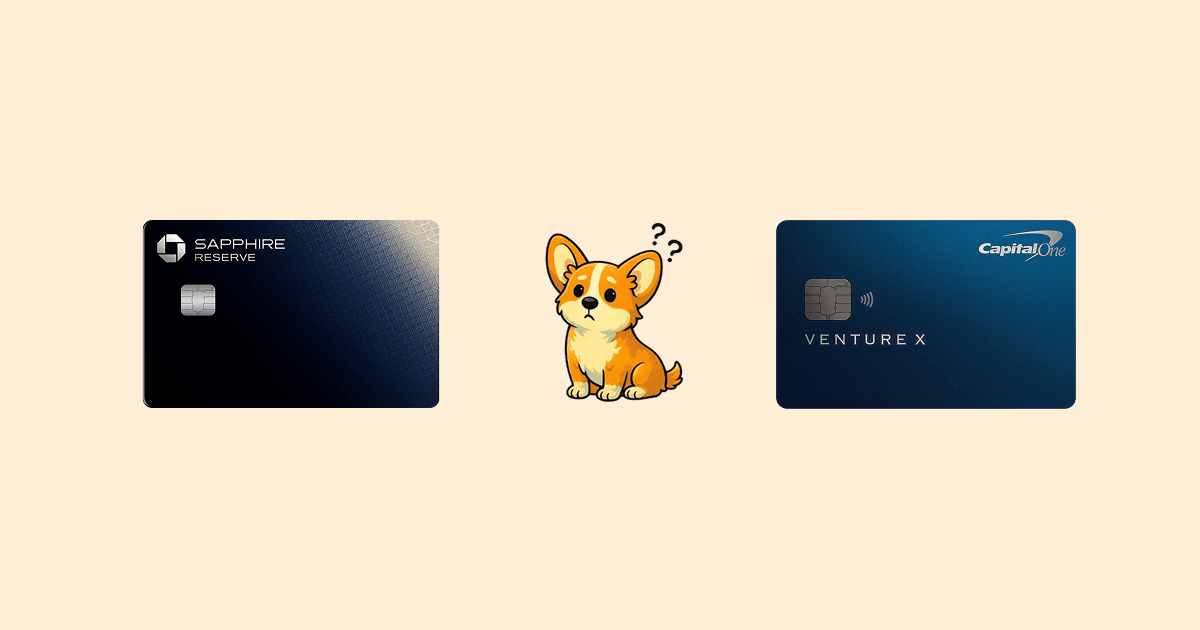
Compare Sapphire Reserve for Business and Capital One Venture X Business across welcome offers, annual fees, credits, lounge access, and rewards rates.
Sapphire Reserve for Business℠ vs Capital One Venture X Business Calculator
Advertiser Disclosure: nextcard may receive compensation from card issuers. Opinions expressed here are the author's alone, not those of any bank, credit card issuer, airlines or hotel chain. For the most up-to-date terms & conditions, refer to the official credit card application on the issuer's website.
MoreLess
Product details may vary. Please see the issuer website for current information. nextcard does not receive commission for this product.The Sapphire Reserve for Business℠ and Capital One Venture X Business are both built for business owners who travel, but they solve different problems. The Sapphire Reserve for Business is the stronger card if you can use Chase credits and spend heavily on travel or advertising. The Venture X Business is the cleaner pick if you want 2x miles on nearly everything and fewer benefits to babysit.
That difference matters more than the headline bonus. Chase gives you more ways to squeeze value out of the card, but only if those credits and categories line up with how your business already operates. Capital One gives you a simpler setup: a lower annual fee, flat 2x earning, a travel portal credit, and anniversary miles.
Analysis
Chase currently advertises 150,000 bonus points after $20,000 in purchases in the first 3 months for the Sapphire Reserve for Business. The card has a $795 annual fee and earns 8x through Chase Travel, 4x on flights and hotels booked direct, 3x on social media and search engine advertising, and 1x on everything else.
Capital One currently advertises 150,000 bonus miles after $30,000 in purchases in the first 3 months for Venture X Business. The card has a $395 annual fee, earns 2x miles on every purchase, and includes a $300 annual Capital One Business Travel credit plus 10,000 anniversary miles.
In other words, Chase asks you to keep track of more, but gives you more ways to win. Capital One is less fussy. If your business has uneven spend across lots of vendors, the Venture X Business earning structure is easy to defend. If you book real travel volume and use Chase Travel or direct airline and hotel bookings, the Sapphire Reserve for Business can pull ahead quickly.
Quick read:
- Choose Sapphire Reserve for Business if your business can use the credits and spends meaningfully on travel or advertising.
- Choose Venture X Business if you want a lower annual fee and a strong 2x catch-all card.
- The Sapphire Reserve for Business has the higher upside; Venture X Business has the easier year-two math.
When the Sapphire Reserve for Business℠ Wins
The Sapphire Reserve for Business wins when the credits are real savings, not chores. A flexible $300 annual travel credit, The Edit hotel credits, Chase Sapphire Lounge access, Priority Pass, Google Workspace credits, ZipRecruiter credits, Lyft credits, and DoorDash promos can add up, but only if they replace expenses your business already has.
It also wins for businesses that put a lot of spend through travel categories. Earning 8x through Chase Travel and 4x on direct flights and hotels is meaningfully stronger than a flat 2x card when those categories make up a big part of your budget. The 3x advertising category is another real edge if your business buys social or search ads.
When the Capital One Venture X Business Wins
The Venture X Business wins when you value simplicity. Earning 2x miles everywhere is useful for contractors, agencies, consultants, and operators with mixed expenses that do not fall neatly into one bonus category.
It is also much easier to justify after the first year. Between the $300 Capital One Business Travel credit and 10,000 anniversary miles, the effective cost can be very reasonable for a business that books at least some travel through Capital One. You give up some of the Chase upside, but you also avoid a lot of credit tracking.
Which card is better overall?
For a travel-heavy business that can use Chase credits naturally, the Sapphire Reserve for Business is the better card. For a business that wants one premium card with a lower annual fee and a simple earning structure, Venture X Business is probably the better fit.
The best answer is not which card has the longest benefits list. It is which card you can use without changing your behavior. If the Chase credits feel forced, go Capital One. If they feel like money back on things you already buy, the Sapphire Reserve for Business becomes much more compelling.
Frequently Asked Questions (FAQs)
Which card has the better welcome offer?
The Sapphire Reserve for Business has the easier spend requirement on the current public offers: 150,000 points after $20,000 in purchases versus 150,000 miles after $30,000 in purchases for Venture X Business. The better bonus depends on how you value Chase Ultimate Rewards compared with Capital One miles.
Which card is better for everyday business spend?
Venture X Business is better for uncategorized everyday spend because it earns 2x miles on every purchase. Sapphire Reserve for Business is stronger in specific categories like Chase Travel, direct flights and hotels, and social media or search engine advertising.
Which card has better lounge access?
The Sapphire Reserve for Business has the stronger lounge story if you value Chase Sapphire Lounges. Venture X Business still offers a good premium travel setup, but Chase has the edge for travelers who regularly pass through airports with Sapphire Lounge access.
Can a business hold both cards?
Yes, and it can make sense for businesses with enough travel volume. Use Venture X Business for simple 2x earning and Sapphire Reserve for Business for Chase Travel, direct travel bookings, advertising, credits, and lounge access. Just make sure the combined annual fees are actually being offset.