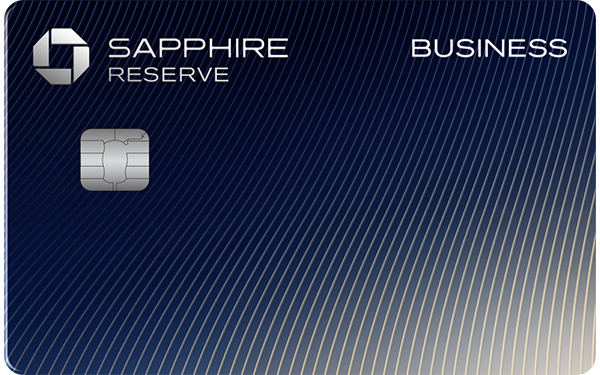



How is the Chase Sapphire Reserve® changing?
NCnextcard team
Advertiser Disclosure: nextcard may receive compensation from card issuers. Opinions expressed here are the author's alone, not those of any bank, credit card issuer, airlines or hotel chain. For the most up-to-date terms & conditions, refer to the official credit card application on the issuer's website.
After many years, Chase has finally decided to launch its own version of a premium travel card for business Sapphire Reserve for Business℠, similar to its competitors in the The Business Platinum Card® from American Express and the Capital One Venture X Business cards.
While the business version of the Sapphire Reserve offers a lot of similar benefits as the personal version of the card, there are some key differences worth understanding.
It’s abundantly clear that the card has a very specific niche that is definitely not going to be for every business owner. While it may work well for some businesses, it may not work well for others, which is why it’s important to make sure it can deliver the value you’re looking for in your business.
Worth it if you spend heavily on social media/search advertising and will use the $300 travel credit and $200 Google Workspace credit each year.
Skip it if you don't use ZipRecruiter, rarely fly Southwest, or mostly stay in midrange hotels; the credits won't offset the $795 annual fee.
Best fit: Mid-market SMBs with $150,000+ in annual ad spend who want lounge access and can realistically use the edit hotel credit.
Sign-up offer: 200,000 bonus points after $30,000 in purchases in the first 6 months; the best public offer on record for this card.

Given the business version is adopted from the personal, there are (unsurprisingly) a lot of overlap between the two:
Up to $300 annual travel credit, which can be used for all types of “travel” purchases, ranging from flights booked directly with the airline to Lyfts/Ubers
Up to $500 credit for The Edit, which is Chase’s version of AMEX’s Fine Hotels and Resorts program (you can view eligible hotels/prices here)
$120 credit for TSA Precheck®, Global Entry, or NEXUS every 4 years
Complimentary lounge access to the Chase Sapphire lounges, Priority Pass lounges, and Air Canada Maple Leaf lounges (terms & restrictions apply) with guests
Best in class travel insurance benefits
Up to $25/mo in Doordash credits, split up into one $5 credit to spend on restaurant orders and two $10 credits to save on nonrestaurant purchases
Since this is a business card, it also offers a few unique benefits that the consumer Sapphire Reserve does not offer:
3x points on advertising purchases made with social media sites and search engines (uncapped!)
$400 ZipRecruiter credit
$200 Google Workspace credit
$100 Giftcards.com credit
No fee for authorized users, but authorized users have no lounge access
After spending $120,000 each calendar year, cardmembers can also unlock the following benefits:
IHG One Rewards Diamond Elite Status
Southwest Airlines A-List Status
$500 Southwest Airlines credit when booked through Chase Travel
$500 credit to The Shops at Chase
The problem I have with this card’s benefits is that they don’t seem to cater towards the needs of many business owners.
While I suspect the up to $300 annual travel credit will be useful for a majority of businesses, I find it difficult to see how the other credits can even fit in.
For starters, I can tell you the majority of startups probably won’t be using ZipRecruiter, and neither are many small businesses with lower employee churn are probably going to divert their efforts to lower-cost/local options (Craigslist, Facebook Jobs, referrals).
This is a clear filter against smaller companies & sole proprietors, which reflects Chase’s push towards acquiring that middle market SMB type of company.
Secondly, the 3x advertising spend bonus multiplier can certainly be huge in the right hands. Given that it's uncapped, it could single handedly replace the likes of the American Express® Business Gold Card, which has a $150,000 limit on earning 4x points.
However, given the Sapphire Reserve for Business lacks any other meaningful business spend bonuses, it may be moot for many. Worth calling out: it does not have any increased rewards on dining spend, which is very unfortunate.
Finally, the "big spend" bonus of $120,000 offers rather questionable perks. Realistically, what fraction of major business owners will be flying Southwest nowadays or staying in IHG hotels?
There's no real incentive for many business owners to hit those targets. Southwest A-List status is genuinely useful if you're a frequent Southwest flyer: you get priority boarding, free same-day standby, and no change fees.
But Southwest has a fairly limited route network, and most mid-market business owners I know are flying United, Delta, or American for the broader coverage.
IHG Diamond Elite status is a nice hotel perk, but IHG's luxury brand footprint is modest compared to Marriott Bonvoy or Hilton… so unless your business travel naturally lands you in Holiday Inn or Intercontinental properties, this perk is going to sit unused.
Spending $120,000 on a card to unlock perks you'd never use anyway is a tough sell.
The earning structure itself tells a different story for the right type of business. This card earns 8x points on Chase Travel bookings, 4x on direct flights and hotel purchases, and 3x on advertising with social media and search engines, all without an annual cap.
Chase Ultimate Rewards transfers to over a dozen airline and hotel partners, including United MileagePlus, World of Hyatt, and Air France KLM Flying Blue, which gives those points real-world travel value. For a business spending $250,000 per year on advertising alone, that's 750,000 Ultimate Rewards points annually from a single category. The card's value concentrates so heavily in travel and advertising that the rewards structure only shines if those two categories dominate your expenses.
Even though the current new cardmember offer is 200,000 bonus points after you spend $30,000 on purchases in your first 6 months from account opening, I still don’t have plans to get the card.
The perks & benefits don’t really offer anything ancillary to what I already have nor do they provide any value to my existing businesses. The only credits I truly see myself using are the up to $300 travel credit and the $200 Google Workspace credit, but outside of that, it’s a questionable gray area. I feel like I would just be using the credits because I have them, not because they are useful to my business operations.
Let's do some quick math. The $795 annual fee is steep. To break even, you'd need to extract real value from enough credits to cover that cost. The $300 travel credit is easy money if you travel at all. The $200 Google Workspace credit is genuinely useful for any business already paying for Workspace. That's $500 in year-one offsets — leaving you still needing another $295 in value from ZipRecruiter, The Edit, Giftcards.com, or the big-spend bonuses. If you're not actually using ZipRecruiter (which runs roughly $299-$499/month for most hiring plans, per ZipRecruiter's pricing page), that $400 credit is worthless to you. And if The Edit hotels aren't in your travel rotation, you're looking at a card that's very hard to justify on credits alone.
The 200,000-point welcome offer is genuinely compelling on paper, and I won't pretend otherwise. Chase Ultimate Rewards points are among the most transferable currencies in travel, and 200,000 points could easily cover a round-trip business class flight to Europe or a hotel stay through a transfer partner. But a sign-up bonus isn't a reason to hold a card long-term — and the ongoing value just isn't there for most business owners.
We haven’t spent a lot of time discussing the $500 The Edit hotel stays credit just yet because I also just can’t really see how/why a business owner would use them. Like, the hotels offered through The Edit are generally very high end, premium hotels that cost a lot of money. Even on a company trip, there’s usually a midrange hotel that meets most needs, but that wouldn’t be something featured on The Edit. For me, The Edit credits are effectively (and unfortunately) worth $0.
Stepping back from the individual credits, here's where I land on the overall value: if I add up everything I'd realistically use (the $300 travel credit and the $200 Google Workspace credit), I'm covering $500 of the $795 annual fee. The Giftcards.com credit ($100) is the closest thing to an easy win on top of that, but it applies only through that specific platform and requires intentional use. Even if I captured it, I'd be at $600 against $795 in fees, still $195 short. For the math to work without ZipRecruiter or The Edit, you'd need to lean heavily on the earning multipliers to make up the difference in points value.
It might be. Some people might find the benefits to be just in line with their spending. If you see yourself hitting some of these checkboxes, then I think you could actually come out ahead with this card:
Over $150,000 spend annually on advertising purchases made with social media sites and search engines (when compared to the American Express® Business Gold Card)
More than $400 in annual spend on ZipRecruiter
Heavy Southwest Airlines usage/spend
Don’t currently have the Consumer Chase Sapphire Reserve®
There's also card overlap worth factoring in before you apply. Chase has a one-Sapphire-at-a-time rule, so if you currently hold the personal Chase Sapphire Reserve or Chase Sapphire Preferred, you'll need to downgrade or close that card before opening this one. The 48-month bonus rule applies here too; if you received a Sapphire welcome bonus within the past four years, you won't qualify for the 200,000-point offer on this card.
If you run a business where digital advertising is a core expense (a marketing agency, a SaaS company with heavy paid acquisition, or an e-commerce brand spending six figures on Google and Meta ads), the 3x advertising multiplier is a genuine reason to look at this card. Spending $200,000 per year on search and social ads generates 600,000 Ultimate Rewards points annually from that category alone. That's real value if you're actively redeeming through transfer partners.
But for most business owners, this card is too specialized to justify the $795 annual fee. The specific combination of high-end travel benefits, niche hiring credits, and ad-spend multipliers works well for a narrow slice of businesses. For everyone outside that slice, there are better options at lower annual fees that cover more ground. I'd hold off and look at alternatives that fit your actual spending mix before committing to this one.
The annual fee is $795 per year. There is no fee for authorized users, though authorized users do not receive lounge access.
The current limited time offer is 200,000 bonus points after spending $30,000 on purchases in the first 6 months from account opening. This is the best public offer on record for this card.
The business version adds business-focused credits like $400 ZipRecruiter, $200 Google Workspace, and 3x points on social media and search advertising purchases.
The personal version lacks these, but both cards share the $300 travel credit, The Edit hotel credit, lounge access, and travel insurance benefits.
It's best for mid-market businesses that spend heavily on digital advertising (over $150,000/year on social media and search ads), actively use ZipRecruiter for hiring, and already hold lounge access or want to add it.
It's a poor fit for sole proprietors, low-ad-spend businesses, or owners who mostly stay in midrange hotels.
After hitting $120,000 in annual spend, cardmembers unlock IHG One Rewards Diamond Elite Status, Southwest Airlines A-List Status, a $500 Southwest Airlines credit when booked through Chase Travel, and a $500 credit to The Shops at Chase.
Advertiser Disclosure: nextcard may receive compensation from card issuers. Opinions expressed here are the author's alone, not those of any bank, credit card issuer, airlines or hotel chain. For the most up-to-date terms & conditions, refer to the official credit card application on the issuer's website.
After many years, Chase has finally decided to launch its own version of a premium travel card for business Sapphire Reserve for Business℠, similar to its competitors in the The Business Platinum Card® from American Express and the Capital One Venture X Business cards.
While the business version of the Sapphire Reserve offers a lot of similar benefits as the personal version of the card, there are some key differences worth understanding.
It’s abundantly clear that the card has a very specific niche that is definitely not going to be for every business owner. While it may work well for some businesses, it may not work well for others, which is why it’s important to make sure it can deliver the value you’re looking for in your business.
Worth it if you spend heavily on social media/search advertising and will use the $300 travel credit and $200 Google Workspace credit each year.
Skip it if you don't use ZipRecruiter, rarely fly Southwest, or mostly stay in midrange hotels; the credits won't offset the $795 annual fee.
Best fit: Mid-market SMBs with $150,000+ in annual ad spend who want lounge access and can realistically use the edit hotel credit.
Sign-up offer: 200,000 bonus points after $30,000 in purchases in the first 6 months; the best public offer on record for this card.
Given the business version is adopted from the personal, there are (unsurprisingly) a lot of overlap between the two:
Up to $300 annual travel credit, which can be used for all types of “travel” purchases, ranging from flights booked directly with the airline to Lyfts/Ubers
Up to $500 credit for The Edit, which is Chase’s version of AMEX’s Fine Hotels and Resorts program (you can view eligible hotels/prices here)
$120 credit for TSA Precheck®, Global Entry, or NEXUS every 4 years
Complimentary lounge access to the Chase Sapphire lounges, Priority Pass lounges, and Air Canada Maple Leaf lounges (terms & restrictions apply) with guests
Best in class travel insurance benefits
Up to $25/mo in Doordash credits, split up into one $5 credit to spend on restaurant orders and two $10 credits to save on nonrestaurant purchases
Since this is a business card, it also offers a few unique benefits that the consumer Sapphire Reserve does not offer:
3x points on advertising purchases made with social media sites and search engines (uncapped!)
$400 ZipRecruiter credit
$200 Google Workspace credit
$100 Giftcards.com credit
No fee for authorized users, but authorized users have no lounge access
After spending $120,000 each calendar year, cardmembers can also unlock the following benefits:
IHG One Rewards Diamond Elite Status
Southwest Airlines A-List Status
$500 Southwest Airlines credit when booked through Chase Travel
$500 credit to The Shops at Chase
The problem I have with this card’s benefits is that they don’t seem to cater towards the needs of many business owners.
While I suspect the up to $300 annual travel credit will be useful for a majority of businesses, I find it difficult to see how the other credits can even fit in.
For starters, I can tell you the majority of startups probably won’t be using ZipRecruiter, and neither are many small businesses with lower employee churn are probably going to divert their efforts to lower-cost/local options (Craigslist, Facebook Jobs, referrals).
This is a clear filter against smaller companies & sole proprietors, which reflects Chase’s push towards acquiring that middle market SMB type of company.
Secondly, the 3x advertising spend bonus multiplier can certainly be huge in the right hands. Given that it's uncapped, it could single handedly replace the likes of the American Express® Business Gold Card, which has a $150,000 limit on earning 4x points.
However, given the Sapphire Reserve for Business lacks any other meaningful business spend bonuses, it may be moot for many. Worth calling out: it does not have any increased rewards on dining spend, which is very unfortunate.
Finally, the "big spend" bonus of $120,000 offers rather questionable perks. Realistically, what fraction of major business owners will be flying Southwest nowadays or staying in IHG hotels?
There's no real incentive for many business owners to hit those targets. Southwest A-List status is genuinely useful if you're a frequent Southwest flyer: you get priority boarding, free same-day standby, and no change fees.
But Southwest has a fairly limited route network, and most mid-market business owners I know are flying United, Delta, or American for the broader coverage.
IHG Diamond Elite status is a nice hotel perk, but IHG's luxury brand footprint is modest compared to Marriott Bonvoy or Hilton… so unless your business travel naturally lands you in Holiday Inn or Intercontinental properties, this perk is going to sit unused.
Spending $120,000 on a card to unlock perks you'd never use anyway is a tough sell.
The earning structure itself tells a different story for the right type of business. This card earns 8x points on Chase Travel bookings, 4x on direct flights and hotel purchases, and 3x on advertising with social media and search engines, all without an annual cap.
Chase Ultimate Rewards transfers to over a dozen airline and hotel partners, including United MileagePlus, World of Hyatt, and Air France KLM Flying Blue, which gives those points real-world travel value. For a business spending $250,000 per year on advertising alone, that's 750,000 Ultimate Rewards points annually from a single category. The card's value concentrates so heavily in travel and advertising that the rewards structure only shines if those two categories dominate your expenses.
Even though the current new cardmember offer is 200,000 bonus points after you spend $30,000 on purchases in your first 6 months from account opening, I still don’t have plans to get the card.
The perks & benefits don’t really offer anything ancillary to what I already have nor do they provide any value to my existing businesses. The only credits I truly see myself using are the up to $300 travel credit and the $200 Google Workspace credit, but outside of that, it’s a questionable gray area. I feel like I would just be using the credits because I have them, not because they are useful to my business operations.
Let's do some quick math. The $795 annual fee is steep. To break even, you'd need to extract real value from enough credits to cover that cost. The $300 travel credit is easy money if you travel at all. The $200 Google Workspace credit is genuinely useful for any business already paying for Workspace. That's $500 in year-one offsets — leaving you still needing another $295 in value from ZipRecruiter, The Edit, Giftcards.com, or the big-spend bonuses. If you're not actually using ZipRecruiter (which runs roughly $299-$499/month for most hiring plans, per ZipRecruiter's pricing page), that $400 credit is worthless to you. And if The Edit hotels aren't in your travel rotation, you're looking at a card that's very hard to justify on credits alone.
The 200,000-point welcome offer is genuinely compelling on paper, and I won't pretend otherwise. Chase Ultimate Rewards points are among the most transferable currencies in travel, and 200,000 points could easily cover a round-trip business class flight to Europe or a hotel stay through a transfer partner. But a sign-up bonus isn't a reason to hold a card long-term — and the ongoing value just isn't there for most business owners.
We haven’t spent a lot of time discussing the $500 The Edit hotel stays credit just yet because I also just can’t really see how/why a business owner would use them. Like, the hotels offered through The Edit are generally very high end, premium hotels that cost a lot of money. Even on a company trip, there’s usually a midrange hotel that meets most needs, but that wouldn’t be something featured on The Edit. For me, The Edit credits are effectively (and unfortunately) worth $0.
Stepping back from the individual credits, here's where I land on the overall value: if I add up everything I'd realistically use (the $300 travel credit and the $200 Google Workspace credit), I'm covering $500 of the $795 annual fee. The Giftcards.com credit ($100) is the closest thing to an easy win on top of that, but it applies only through that specific platform and requires intentional use. Even if I captured it, I'd be at $600 against $795 in fees, still $195 short. For the math to work without ZipRecruiter or The Edit, you'd need to lean heavily on the earning multipliers to make up the difference in points value.
It might be. Some people might find the benefits to be just in line with their spending. If you see yourself hitting some of these checkboxes, then I think you could actually come out ahead with this card:
Over $150,000 spend annually on advertising purchases made with social media sites and search engines (when compared to the American Express® Business Gold Card)
More than $400 in annual spend on ZipRecruiter
Heavy Southwest Airlines usage/spend
Don’t currently have the Consumer Chase Sapphire Reserve®
There's also card overlap worth factoring in before you apply. Chase has a one-Sapphire-at-a-time rule, so if you currently hold the personal Chase Sapphire Reserve or Chase Sapphire Preferred, you'll need to downgrade or close that card before opening this one. The 48-month bonus rule applies here too; if you received a Sapphire welcome bonus within the past four years, you won't qualify for the 200,000-point offer on this card.
If you run a business where digital advertising is a core expense (a marketing agency, a SaaS company with heavy paid acquisition, or an e-commerce brand spending six figures on Google and Meta ads), the 3x advertising multiplier is a genuine reason to look at this card. Spending $200,000 per year on search and social ads generates 600,000 Ultimate Rewards points annually from that category alone. That's real value if you're actively redeeming through transfer partners.
But for most business owners, this card is too specialized to justify the $795 annual fee. The specific combination of high-end travel benefits, niche hiring credits, and ad-spend multipliers works well for a narrow slice of businesses. For everyone outside that slice, there are better options at lower annual fees that cover more ground. I'd hold off and look at alternatives that fit your actual spending mix before committing to this one.
The annual fee is $795 per year. There is no fee for authorized users, though authorized users do not receive lounge access.
The current limited time offer is 200,000 bonus points after spending $30,000 on purchases in the first 6 months from account opening. This is the best public offer on record for this card.
The business version adds business-focused credits like $400 ZipRecruiter, $200 Google Workspace, and 3x points on social media and search advertising purchases.
The personal version lacks these, but both cards share the $300 travel credit, The Edit hotel credit, lounge access, and travel insurance benefits.
It's best for mid-market businesses that spend heavily on digital advertising (over $150,000/year on social media and search ads), actively use ZipRecruiter for hiring, and already hold lounge access or want to add it.
It's a poor fit for sole proprietors, low-ad-spend businesses, or owners who mostly stay in midrange hotels.
After hitting $120,000 in annual spend, cardmembers unlock IHG One Rewards Diamond Elite Status, Southwest Airlines A-List Status, a $500 Southwest Airlines credit when booked through Chase Travel, and a $500 credit to The Shops at Chase.
After many years, Chase has finally decided to launch its own version of a premium travel card for business Sapphire Reserve for Business℠, similar to its competitors in the The Business Platinum Card® from American Express and the Capital One Venture X Business cards.
While the business version of the Sapphire Reserve offers a lot of similar benefits as the personal version of the card, there are some key differences worth understanding.
It’s abundantly clear that the card has a very specific niche that is definitely not going to be for every business owner. While it may work well for some businesses, it may not work well for others, which is why it’s important to make sure it can deliver the value you’re looking for in your business.
Worth it if you spend heavily on social media/search advertising and will use the $300 travel credit and $200 Google Workspace credit each year.
Skip it if you don't use ZipRecruiter, rarely fly Southwest, or mostly stay in midrange hotels; the credits won't offset the $795 annual fee.
Best fit: Mid-market SMBs with $150,000+ in annual ad spend who want lounge access and can realistically use the edit hotel credit.
Sign-up offer: 200,000 bonus points after $30,000 in purchases in the first 6 months; the best public offer on record for this card.
Given the business version is adopted from the personal, there are (unsurprisingly) a lot of overlap between the two:
Up to $300 annual travel credit, which can be used for all types of “travel” purchases, ranging from flights booked directly with the airline to Lyfts/Ubers
Up to $500 credit for The Edit, which is Chase’s version of AMEX’s Fine Hotels and Resorts program (you can view eligible hotels/prices here)
$120 credit for TSA Precheck®, Global Entry, or NEXUS every 4 years
Complimentary lounge access to the Chase Sapphire lounges, Priority Pass lounges, and Air Canada Maple Leaf lounges (terms & restrictions apply) with guests
Best in class travel insurance benefits
Up to $25/mo in Doordash credits, split up into one $5 credit to spend on restaurant orders and two $10 credits to save on nonrestaurant purchases
Since this is a business card, it also offers a few unique benefits that the consumer Sapphire Reserve does not offer:
3x points on advertising purchases made with social media sites and search engines (uncapped!)
$400 ZipRecruiter credit
$200 Google Workspace credit
$100 Giftcards.com credit
No fee for authorized users, but authorized users have no lounge access
After spending $120,000 each calendar year, cardmembers can also unlock the following benefits:
IHG One Rewards Diamond Elite Status
Southwest Airlines A-List Status
$500 Southwest Airlines credit when booked through Chase Travel
$500 credit to The Shops at Chase
The problem I have with this card’s benefits is that they don’t seem to cater towards the needs of many business owners.
While I suspect the up to $300 annual travel credit will be useful for a majority of businesses, I find it difficult to see how the other credits can even fit in.
For starters, I can tell you the majority of startups probably won’t be using ZipRecruiter, and neither are many small businesses with lower employee churn are probably going to divert their efforts to lower-cost/local options (Craigslist, Facebook Jobs, referrals).
This is a clear filter against smaller companies & sole proprietors, which reflects Chase’s push towards acquiring that middle market SMB type of company.
Secondly, the 3x advertising spend bonus multiplier can certainly be huge in the right hands. Given that it's uncapped, it could single handedly replace the likes of the American Express® Business Gold Card, which has a $150,000 limit on earning 4x points.
However, given the Sapphire Reserve for Business lacks any other meaningful business spend bonuses, it may be moot for many. Worth calling out: it does not have any increased rewards on dining spend, which is very unfortunate.
Finally, the "big spend" bonus of $120,000 offers rather questionable perks. Realistically, what fraction of major business owners will be flying Southwest nowadays or staying in IHG hotels?
There's no real incentive for many business owners to hit those targets. Southwest A-List status is genuinely useful if you're a frequent Southwest flyer: you get priority boarding, free same-day standby, and no change fees.
But Southwest has a fairly limited route network, and most mid-market business owners I know are flying United, Delta, or American for the broader coverage.
IHG Diamond Elite status is a nice hotel perk, but IHG's luxury brand footprint is modest compared to Marriott Bonvoy or Hilton… so unless your business travel naturally lands you in Holiday Inn or Intercontinental properties, this perk is going to sit unused.
Spending $120,000 on a card to unlock perks you'd never use anyway is a tough sell.
The earning structure itself tells a different story for the right type of business. This card earns 8x points on Chase Travel bookings, 4x on direct flights and hotel purchases, and 3x on advertising with social media and search engines, all without an annual cap.
Chase Ultimate Rewards transfers to over a dozen airline and hotel partners, including United MileagePlus, World of Hyatt, and Air France KLM Flying Blue, which gives those points real-world travel value. For a business spending $250,000 per year on advertising alone, that's 750,000 Ultimate Rewards points annually from a single category. The card's value concentrates so heavily in travel and advertising that the rewards structure only shines if those two categories dominate your expenses.
Even though the current new cardmember offer is 200,000 bonus points after you spend $30,000 on purchases in your first 6 months from account opening, I still don’t have plans to get the card.
The perks & benefits don’t really offer anything ancillary to what I already have nor do they provide any value to my existing businesses. The only credits I truly see myself using are the up to $300 travel credit and the $200 Google Workspace credit, but outside of that, it’s a questionable gray area. I feel like I would just be using the credits because I have them, not because they are useful to my business operations.
Let's do some quick math. The $795 annual fee is steep. To break even, you'd need to extract real value from enough credits to cover that cost. The $300 travel credit is easy money if you travel at all. The $200 Google Workspace credit is genuinely useful for any business already paying for Workspace. That's $500 in year-one offsets — leaving you still needing another $295 in value from ZipRecruiter, The Edit, Giftcards.com, or the big-spend bonuses. If you're not actually using ZipRecruiter (which runs roughly $299-$499/month for most hiring plans, per ZipRecruiter's pricing page), that $400 credit is worthless to you. And if The Edit hotels aren't in your travel rotation, you're looking at a card that's very hard to justify on credits alone.
The 200,000-point welcome offer is genuinely compelling on paper, and I won't pretend otherwise. Chase Ultimate Rewards points are among the most transferable currencies in travel, and 200,000 points could easily cover a round-trip business class flight to Europe or a hotel stay through a transfer partner. But a sign-up bonus isn't a reason to hold a card long-term — and the ongoing value just isn't there for most business owners.
We haven’t spent a lot of time discussing the $500 The Edit hotel stays credit just yet because I also just can’t really see how/why a business owner would use them. Like, the hotels offered through The Edit are generally very high end, premium hotels that cost a lot of money. Even on a company trip, there’s usually a midrange hotel that meets most needs, but that wouldn’t be something featured on The Edit. For me, The Edit credits are effectively (and unfortunately) worth $0.
Stepping back from the individual credits, here's where I land on the overall value: if I add up everything I'd realistically use (the $300 travel credit and the $200 Google Workspace credit), I'm covering $500 of the $795 annual fee. The Giftcards.com credit ($100) is the closest thing to an easy win on top of that, but it applies only through that specific platform and requires intentional use. Even if I captured it, I'd be at $600 against $795 in fees, still $195 short. For the math to work without ZipRecruiter or The Edit, you'd need to lean heavily on the earning multipliers to make up the difference in points value.
It might be. Some people might find the benefits to be just in line with their spending. If you see yourself hitting some of these checkboxes, then I think you could actually come out ahead with this card:
Over $150,000 spend annually on advertising purchases made with social media sites and search engines (when compared to the American Express® Business Gold Card)
More than $400 in annual spend on ZipRecruiter
Heavy Southwest Airlines usage/spend
Don’t currently have the Consumer Chase Sapphire Reserve®
There's also card overlap worth factoring in before you apply. Chase has a one-Sapphire-at-a-time rule, so if you currently hold the personal Chase Sapphire Reserve or Chase Sapphire Preferred, you'll need to downgrade or close that card before opening this one. The 48-month bonus rule applies here too; if you received a Sapphire welcome bonus within the past four years, you won't qualify for the 200,000-point offer on this card.
If you run a business where digital advertising is a core expense (a marketing agency, a SaaS company with heavy paid acquisition, or an e-commerce brand spending six figures on Google and Meta ads), the 3x advertising multiplier is a genuine reason to look at this card. Spending $200,000 per year on search and social ads generates 600,000 Ultimate Rewards points annually from that category alone. That's real value if you're actively redeeming through transfer partners.
But for most business owners, this card is too specialized to justify the $795 annual fee. The specific combination of high-end travel benefits, niche hiring credits, and ad-spend multipliers works well for a narrow slice of businesses. For everyone outside that slice, there are better options at lower annual fees that cover more ground. I'd hold off and look at alternatives that fit your actual spending mix before committing to this one.
The annual fee is $795 per year. There is no fee for authorized users, though authorized users do not receive lounge access.
The current limited time offer is 200,000 bonus points after spending $30,000 on purchases in the first 6 months from account opening. This is the best public offer on record for this card.
The business version adds business-focused credits like $400 ZipRecruiter, $200 Google Workspace, and 3x points on social media and search advertising purchases.
The personal version lacks these, but both cards share the $300 travel credit, The Edit hotel credit, lounge access, and travel insurance benefits.
It's best for mid-market businesses that spend heavily on digital advertising (over $150,000/year on social media and search ads), actively use ZipRecruiter for hiring, and already hold lounge access or want to add it.
It's a poor fit for sole proprietors, low-ad-spend businesses, or owners who mostly stay in midrange hotels.
After hitting $120,000 in annual spend, cardmembers unlock IHG One Rewards Diamond Elite Status, Southwest Airlines A-List Status, a $500 Southwest Airlines credit when booked through Chase Travel, and a $500 credit to The Shops at Chase.
After many years, Chase has finally decided to launch its own version of a premium travel card for business Sapphire Reserve for Business℠, similar to its competitors in the The Business Platinum Card® from American Express and the Capital One Venture X Business cards.
While the business version of the Sapphire Reserve offers a lot of similar benefits as the personal version of the card, there are some key differences worth understanding.
It’s abundantly clear that the card has a very specific niche that is definitely not going to be for every business owner. While it may work well for some businesses, it may not work well for others, which is why it’s important to make sure it can deliver the value you’re looking for in your business.
Worth it if you spend heavily on social media/search advertising and will use the $300 travel credit and $200 Google Workspace credit each year.
Skip it if you don't use ZipRecruiter, rarely fly Southwest, or mostly stay in midrange hotels; the credits won't offset the $795 annual fee.
Best fit: Mid-market SMBs with $150,000+ in annual ad spend who want lounge access and can realistically use the edit hotel credit.
Sign-up offer: 200,000 bonus points after $30,000 in purchases in the first 6 months; the best public offer on record for this card.
Given the business version is adopted from the personal, there are (unsurprisingly) a lot of overlap between the two:
Up to $300 annual travel credit, which can be used for all types of “travel” purchases, ranging from flights booked directly with the airline to Lyfts/Ubers
Up to $500 credit for The Edit, which is Chase’s version of AMEX’s Fine Hotels and Resorts program (you can view eligible hotels/prices here)
$120 credit for TSA Precheck®, Global Entry, or NEXUS every 4 years
Complimentary lounge access to the Chase Sapphire lounges, Priority Pass lounges, and Air Canada Maple Leaf lounges (terms & restrictions apply) with guests
Best in class travel insurance benefits
Up to $25/mo in Doordash credits, split up into one $5 credit to spend on restaurant orders and two $10 credits to save on nonrestaurant purchases
Since this is a business card, it also offers a few unique benefits that the consumer Sapphire Reserve does not offer:
3x points on advertising purchases made with social media sites and search engines (uncapped!)
$400 ZipRecruiter credit
$200 Google Workspace credit
$100 Giftcards.com credit
No fee for authorized users, but authorized users have no lounge access
After spending $120,000 each calendar year, cardmembers can also unlock the following benefits:
IHG One Rewards Diamond Elite Status
Southwest Airlines A-List Status
$500 Southwest Airlines credit when booked through Chase Travel
$500 credit to The Shops at Chase
The problem I have with this card’s benefits is that they don’t seem to cater towards the needs of many business owners.
While I suspect the up to $300 annual travel credit will be useful for a majority of businesses, I find it difficult to see how the other credits can even fit in.
For starters, I can tell you the majority of startups probably won’t be using ZipRecruiter, and neither are many small businesses with lower employee churn are probably going to divert their efforts to lower-cost/local options (Craigslist, Facebook Jobs, referrals).
This is a clear filter against smaller companies & sole proprietors, which reflects Chase’s push towards acquiring that middle market SMB type of company.
Secondly, the 3x advertising spend bonus multiplier can certainly be huge in the right hands. Given that it's uncapped, it could single handedly replace the likes of the American Express® Business Gold Card, which has a $150,000 limit on earning 4x points.
However, given the Sapphire Reserve for Business lacks any other meaningful business spend bonuses, it may be moot for many. Worth calling out: it does not have any increased rewards on dining spend, which is very unfortunate.
Finally, the "big spend" bonus of $120,000 offers rather questionable perks. Realistically, what fraction of major business owners will be flying Southwest nowadays or staying in IHG hotels?
There's no real incentive for many business owners to hit those targets. Southwest A-List status is genuinely useful if you're a frequent Southwest flyer: you get priority boarding, free same-day standby, and no change fees.
But Southwest has a fairly limited route network, and most mid-market business owners I know are flying United, Delta, or American for the broader coverage.
IHG Diamond Elite status is a nice hotel perk, but IHG's luxury brand footprint is modest compared to Marriott Bonvoy or Hilton… so unless your business travel naturally lands you in Holiday Inn or Intercontinental properties, this perk is going to sit unused.
Spending $120,000 on a card to unlock perks you'd never use anyway is a tough sell.
The earning structure itself tells a different story for the right type of business. This card earns 8x points on Chase Travel bookings, 4x on direct flights and hotel purchases, and 3x on advertising with social media and search engines, all without an annual cap.
Chase Ultimate Rewards transfers to over a dozen airline and hotel partners, including United MileagePlus, World of Hyatt, and Air France KLM Flying Blue, which gives those points real-world travel value. For a business spending $250,000 per year on advertising alone, that's 750,000 Ultimate Rewards points annually from a single category. The card's value concentrates so heavily in travel and advertising that the rewards structure only shines if those two categories dominate your expenses.
Even though the current new cardmember offer is 200,000 bonus points after you spend $30,000 on purchases in your first 6 months from account opening, I still don’t have plans to get the card.
The perks & benefits don’t really offer anything ancillary to what I already have nor do they provide any value to my existing businesses. The only credits I truly see myself using are the up to $300 travel credit and the $200 Google Workspace credit, but outside of that, it’s a questionable gray area. I feel like I would just be using the credits because I have them, not because they are useful to my business operations.
Let's do some quick math. The $795 annual fee is steep. To break even, you'd need to extract real value from enough credits to cover that cost. The $300 travel credit is easy money if you travel at all. The $200 Google Workspace credit is genuinely useful for any business already paying for Workspace. That's $500 in year-one offsets — leaving you still needing another $295 in value from ZipRecruiter, The Edit, Giftcards.com, or the big-spend bonuses. If you're not actually using ZipRecruiter (which runs roughly $299-$499/month for most hiring plans, per ZipRecruiter's pricing page), that $400 credit is worthless to you. And if The Edit hotels aren't in your travel rotation, you're looking at a card that's very hard to justify on credits alone.
The 200,000-point welcome offer is genuinely compelling on paper, and I won't pretend otherwise. Chase Ultimate Rewards points are among the most transferable currencies in travel, and 200,000 points could easily cover a round-trip business class flight to Europe or a hotel stay through a transfer partner. But a sign-up bonus isn't a reason to hold a card long-term — and the ongoing value just isn't there for most business owners.
We haven’t spent a lot of time discussing the $500 The Edit hotel stays credit just yet because I also just can’t really see how/why a business owner would use them. Like, the hotels offered through The Edit are generally very high end, premium hotels that cost a lot of money. Even on a company trip, there’s usually a midrange hotel that meets most needs, but that wouldn’t be something featured on The Edit. For me, The Edit credits are effectively (and unfortunately) worth $0.
Stepping back from the individual credits, here's where I land on the overall value: if I add up everything I'd realistically use (the $300 travel credit and the $200 Google Workspace credit), I'm covering $500 of the $795 annual fee. The Giftcards.com credit ($100) is the closest thing to an easy win on top of that, but it applies only through that specific platform and requires intentional use. Even if I captured it, I'd be at $600 against $795 in fees, still $195 short. For the math to work without ZipRecruiter or The Edit, you'd need to lean heavily on the earning multipliers to make up the difference in points value.
It might be. Some people might find the benefits to be just in line with their spending. If you see yourself hitting some of these checkboxes, then I think you could actually come out ahead with this card:
Over $150,000 spend annually on advertising purchases made with social media sites and search engines (when compared to the American Express® Business Gold Card)
More than $400 in annual spend on ZipRecruiter
Heavy Southwest Airlines usage/spend
Don’t currently have the Consumer Chase Sapphire Reserve®
There's also card overlap worth factoring in before you apply. Chase has a one-Sapphire-at-a-time rule, so if you currently hold the personal Chase Sapphire Reserve or Chase Sapphire Preferred, you'll need to downgrade or close that card before opening this one. The 48-month bonus rule applies here too; if you received a Sapphire welcome bonus within the past four years, you won't qualify for the 200,000-point offer on this card.
If you run a business where digital advertising is a core expense (a marketing agency, a SaaS company with heavy paid acquisition, or an e-commerce brand spending six figures on Google and Meta ads), the 3x advertising multiplier is a genuine reason to look at this card. Spending $200,000 per year on search and social ads generates 600,000 Ultimate Rewards points annually from that category alone. That's real value if you're actively redeeming through transfer partners.
But for most business owners, this card is too specialized to justify the $795 annual fee. The specific combination of high-end travel benefits, niche hiring credits, and ad-spend multipliers works well for a narrow slice of businesses. For everyone outside that slice, there are better options at lower annual fees that cover more ground. I'd hold off and look at alternatives that fit your actual spending mix before committing to this one.
The annual fee is $795 per year. There is no fee for authorized users, though authorized users do not receive lounge access.
The current limited time offer is 200,000 bonus points after spending $30,000 on purchases in the first 6 months from account opening. This is the best public offer on record for this card.
The business version adds business-focused credits like $400 ZipRecruiter, $200 Google Workspace, and 3x points on social media and search advertising purchases.
The personal version lacks these, but both cards share the $300 travel credit, The Edit hotel credit, lounge access, and travel insurance benefits.
It's best for mid-market businesses that spend heavily on digital advertising (over $150,000/year on social media and search ads), actively use ZipRecruiter for hiring, and already hold lounge access or want to add it.
It's a poor fit for sole proprietors, low-ad-spend businesses, or owners who mostly stay in midrange hotels.
After hitting $120,000 in annual spend, cardmembers unlock IHG One Rewards Diamond Elite Status, Southwest Airlines A-List Status, a $500 Southwest Airlines credit when booked through Chase Travel, and a $500 credit to The Shops at Chase.